
Sea State and Swell - What’s the difference?
If you’ve ever checked a marine forecast, you’ve probably seen the terms sea state and swell. They both describe waves - but they mean different things.
🌊 What is a wave?
A wave is energy moving through the water. It makes the surface go up and down as it travels across the ocean.
Waves can be described by:
Height - how tall the wave is between the highest point, the crest, and its lowest point, the trough
Length - the distance between one wave crest and the next
Period - how long it takes one wave cycle to pass
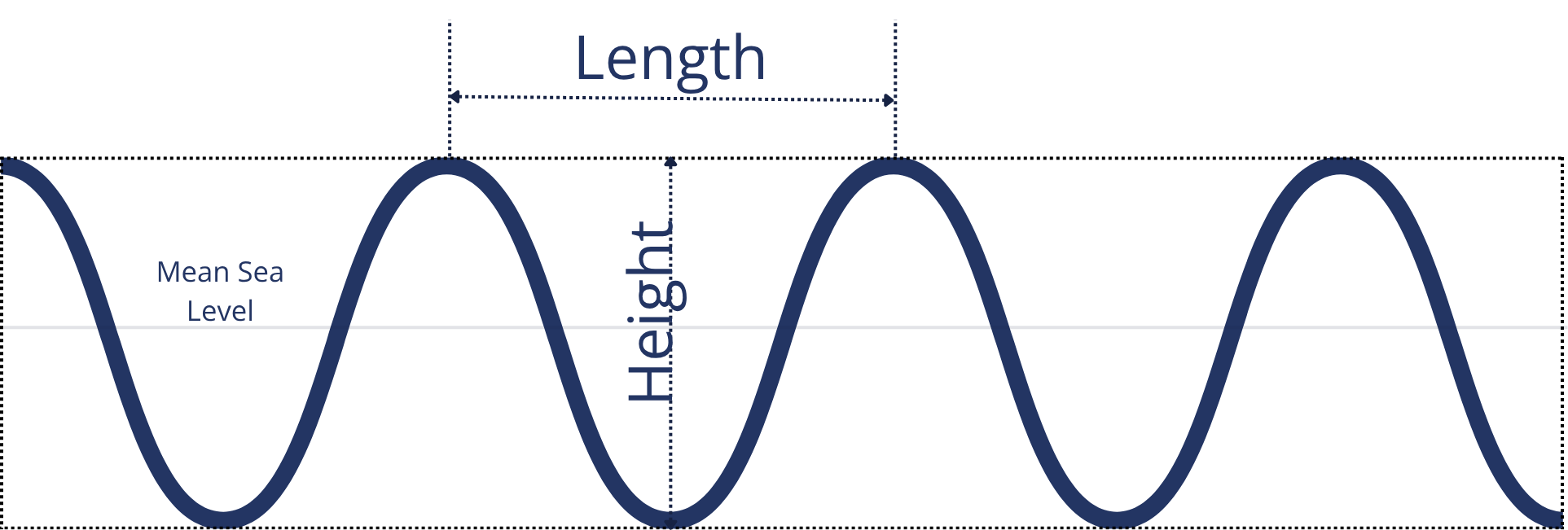
Waves have height, length, and timing. The period of a wave is the time it takes for a one crest and the next to pass a fixed point.
What is sea state?
Sea state describes waves caused by the wind blowing where you are right now.
Strong winds → rough, choppy water
Light winds → calmer surface
These waves:
are usually short and messy
change quickly if the wind changes
can stop when the wind drops
In simple terms:
Sea state = what the local wind is doing to the ocean
Sea state is described as
Smooth - wave heights of less than half a metre
Slight - waves heights of half a metre to 1.25m
Moderate - 1.25m to 2.5m
Rough - 2.5m to 4m
Very Rough - 4m to 6m
High - 6m to 9m
Very High - wave heights more than 9 metres
What is “swell”?
Swell is made by weather far away, like strong winds or storms out at sea.
These waves travel long distances and can reach you even when the weather nearby is calm.
Swell waves are usually:
smoother
evenly spaced
and can be more powerful than they look
In simple terms:
Swell = waves that have travelled from distant storms
As the sea conditions can be made up of swells of different heights, in the MetService forecasts the swell height given is called the Significant Swell Height. The significant swell height is the average height of the largest third of the waves, but there will be higher waves in the mix, sometimes as much as twice the significant swell height.
What happens when both are present?
Most of the time, the ocean has both sea and swell at once.
This can create:
waves coming from different directions
uneven, confusing conditions
bigger and more uncomfortable seas
For people on the water, this mix can make things harder—and sometimes unsafe.
Understanding sea state and swell helps you:
Stay safe while boating
Choose the best surf conditions
Be aware of coastal hazards
You might see calm weather—but a strong swell can still be arriving from far away.
