
Solstices, Equinoxes, and Equiluxes
As the Earth orbits the Sun, it also rotates, which gives us day and night. But it doesn’t spin vertically, like a ballerina. Instead, Earth is tilted at a bit of an angle (23.44°, for those who like numbers). As it orbits, this tilt means the southern hemisphere (and Aotearoa / New Zealand) is more exposed to the sun during summer, and less exposed during winter. More sun means longer days and warmer temperatures, while less sun means shorter days and colder temperatures.
Since we’re orbiting, we follow a cycle; each day is a little bit longer than the next, and the sun gets higher in the sky, until we reach a point where the next day is actually shorter than the one before it, and the sun starts getting lower again. Then day length decreases slowly, and the sun keeps dropping, until we reach a point where the next day is longer than the one before it, and the sun starts getting higher again. Then we start the cycle over.
The position of the Earth and Sun at the solstices and equinoxes (southern hemisphere centric).
Those two days are called solstices. The longest day happens around December 21st in the southern hemisphere, and is known as the summer solstice. The shortest day is around June 21st, and is known as the winter solstice. For the northern hemisphere, the seasons are flipped but the dates remain the same. If we’re talking about both hemispheres at the same time, referring to them as the December solstice and the June solstice helps to avoid seasonal confusion.
If we track the position of the sun while we’re on the equator, we’d see it moving towards the south during southern hemisphere summer, and towards the north during southern hemisphere winter. But we’d have two days of the year when the sun was directly overhead at noon, as it crossed between hemispheres. Those two days are around March 20th and September 23rd, and are called equinoxes. In the southern hemisphere, the equinox in September is known as the vernal equinox, and the March one is the autumnal equinox.
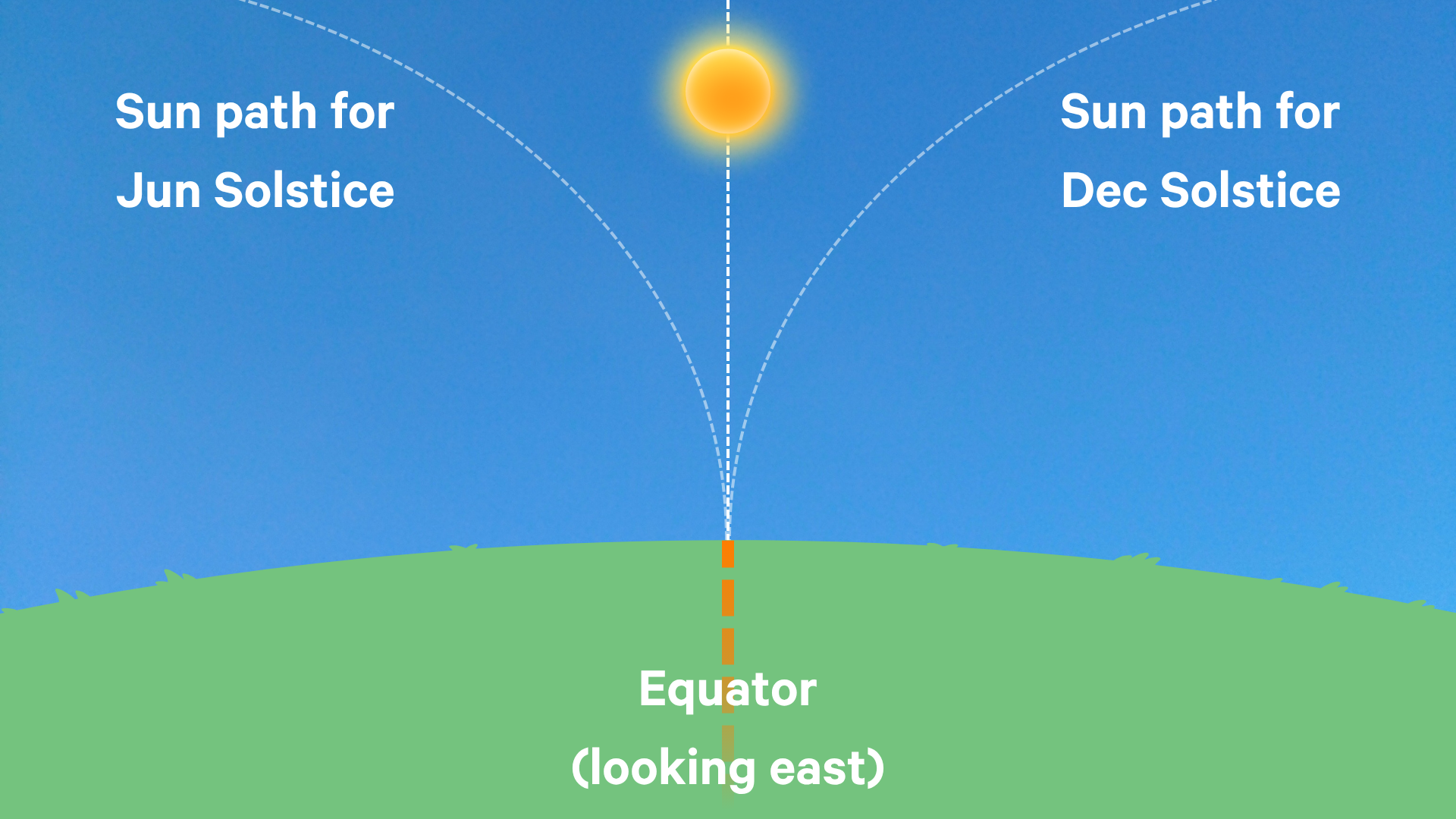
The sun paths on the equator. At the two equinoxes, the sun is directly overhead at noon. During southern hemisphere winter, the sun path is to the north of the equator, and during southern hemisphere summer, the path is to the south.
This gives a convenient way to define seasons. Astronomers consider southern hemisphere spring to start at the vernal equinox, and end at the summer solstice. Summer goes from the summer solstice to the autumnal equinox, autumn from the autumnal equinox to the winter solstice, and winter from the winter solstice to the vernal equinox. All nice and straightforward, that shouldn’t cause any arguments, right?
Just about everyone disagrees. Different countries and cultures have different ideas about when seasons start, how many seasons there are, and even how you should define a season. More tropical regions tend to split their year into a wet season and a dry season, and others recognise a third season that’s cooler than the dry season but drier than the wet season. Some cultures use five, six, or even more distinct seasons, depending on temperature, rainfall, and the activity of local plants and animals.
In Aotearoa / New Zealand, we stick with four seasons. They’re close to the astronomical ones, just starting on the first of the month instead of on the solstice or equinox. This also makes weather and climate data easier to work with; if we want to talk about average rainfall in spring, we can just use the info from September, October, and November, rather than needing to slice off parts of September and add in bits of December.
So if the winter solstice is the shortest day of the year, and the summer solstice is the longest, what happens at the equinoxes? There’s a bit of a hint in the name; equinox comes from the Latin word aequinoctium, which is made of the words aequa, meaning ‘equal’, and nox, meaning ‘night’. So the equinox is the ‘equal night’, or the point of the year where night and day are the same length, 12 hours each.
Except, that’s not quite right. If you look at sunrise and sunset times at the equinoxes, say via metservice.com, you can see that the day is very slightly longer than the night. That’s because of the way we define sunrise and sunset; astronomical sunrise is when the top of the sun is just visible over the horizon, and astronomical sunset is when it’s just disappeared below the horizon. It takes just over a minute for the sun to travel that extra distance, so we add about two minutes to the day.
But looking at those sunrise and sunset times, the day is actually even longer than that during the equinox, by another five minutes or so. That’s because light doesn’t really travel in a straight line in the atmosphere. It bends a little as it goes through, in a process called refraction. This means we actually see the light from the sun a bit before it peeks over the horizon at sunrise, and for a bit longer after it’s dipped back below at sunset. When it looks like it’s fully above the horizon, it’s still completely below it!
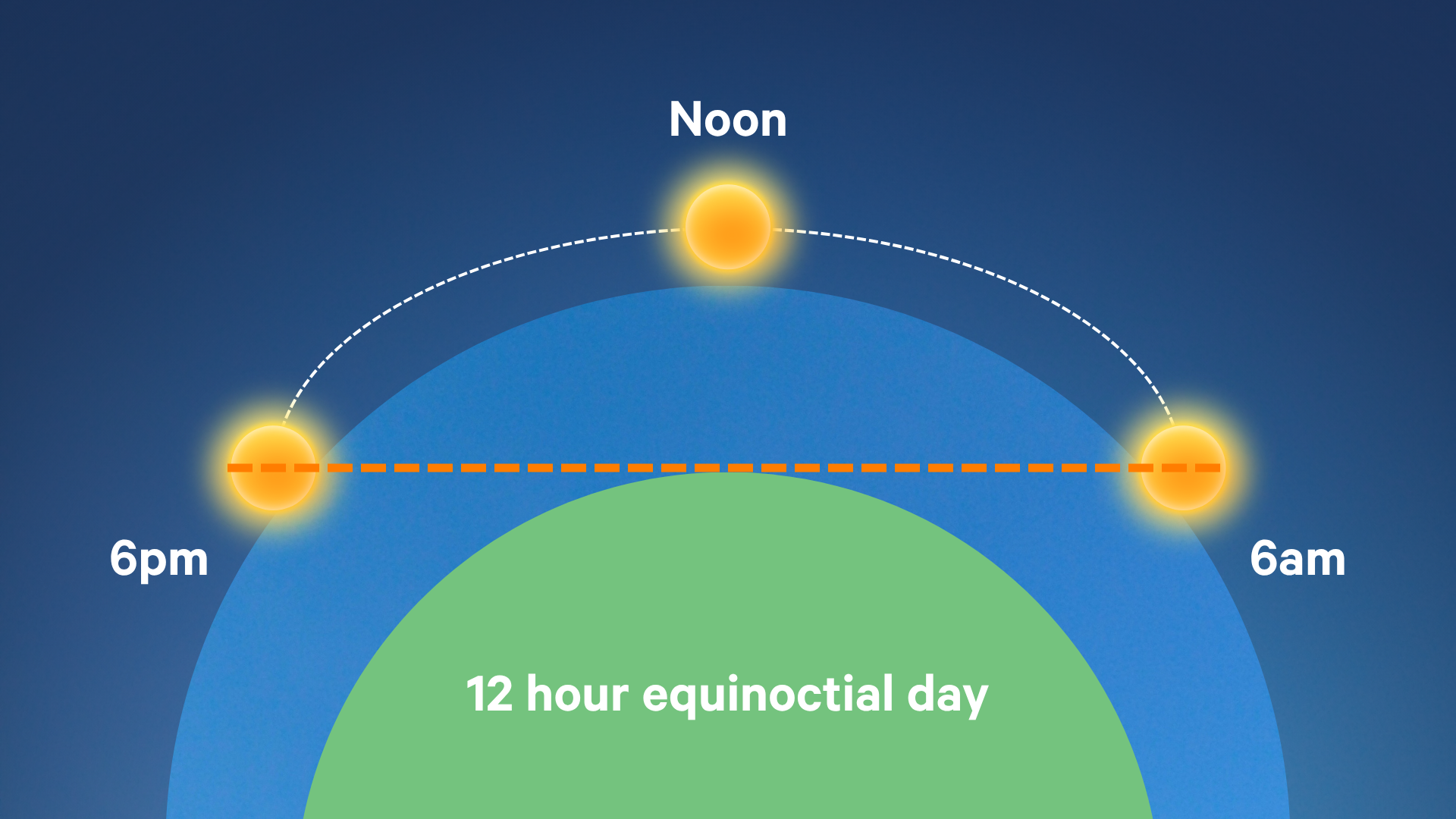
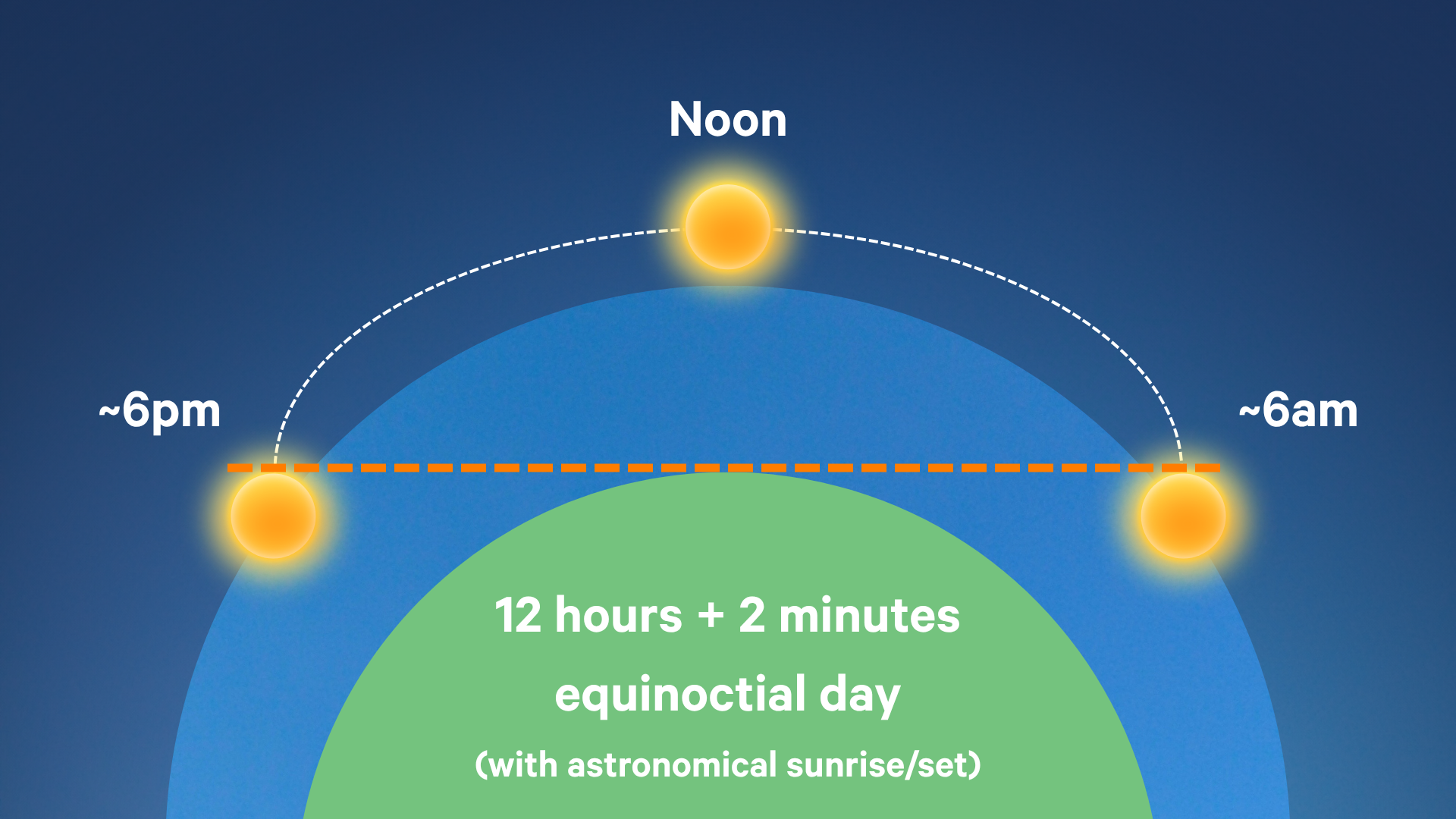
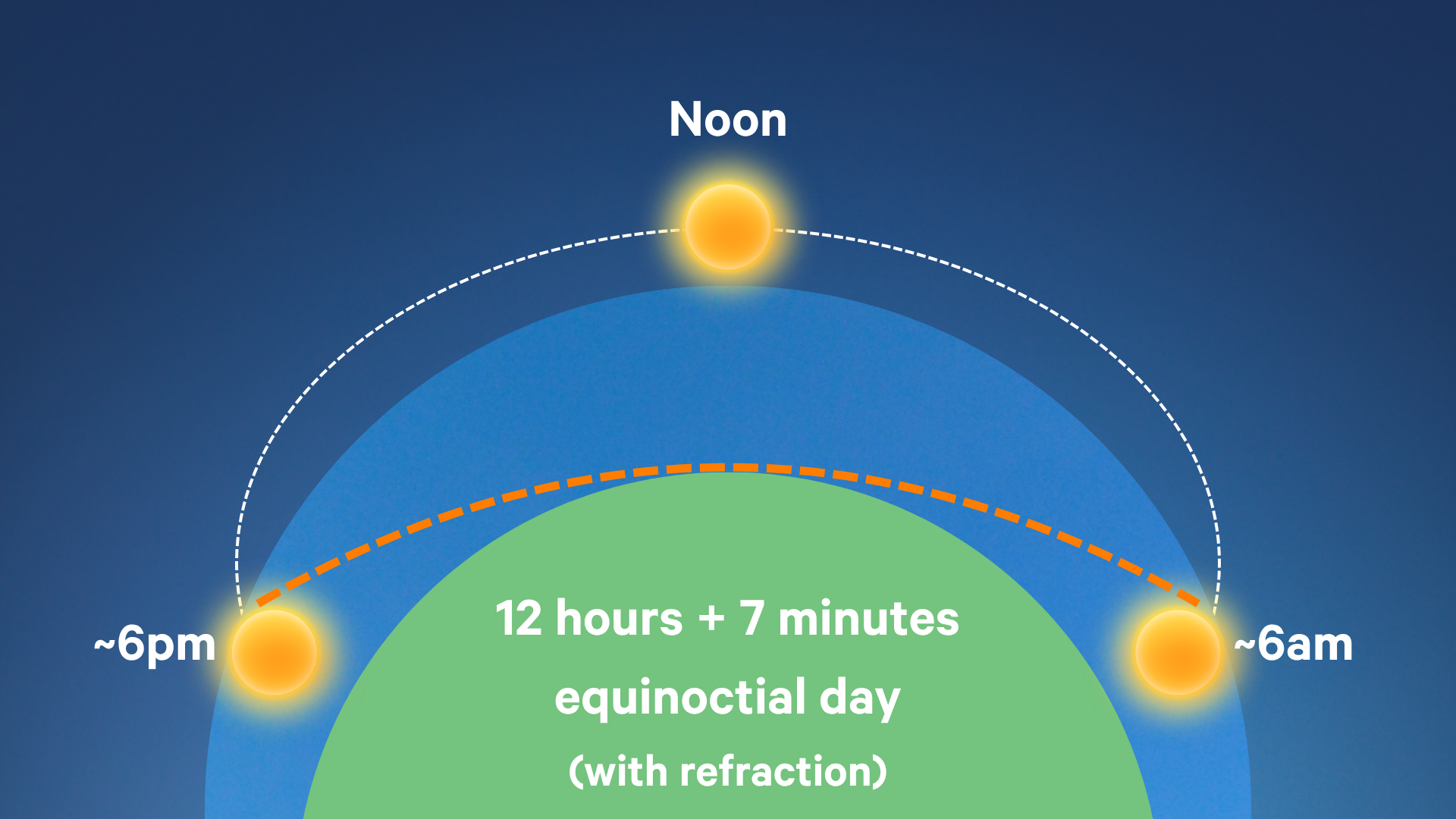
There are still dates where the day and night are equal length. Because the word equinox was already taken, we refer to them as equiluxes, with lux meaning ‘light’. Equiluxes happen on different dates, depending on how close you are to the equator. In Kaitaia, the autumn equilux occurs around March 24th, while in Queenstown, it’s around March 23rd. Much further north in Tonga, it’s around April 14th. The spring equilux is around September 19th for all of NZ, but August 29th in Tonga. Locations on the equator itself never get an equilux, as the day there is always longer than the night (due to astronomical sunrise/set and refraction).
Over the few weeks after the spring equinox, we get to notice the longer days (thanks in part to our switch to Daylight Saving), and there will be extra warmth reaching the southern ocean. This helps to activate the generally westerly quarter winds found there, and usually causes these winds to expand onto New Zealand producing fronts and squally winds. This period of “equinoctial gales” normally reaches its peak in October and November.