
Strong El Niño: Spring and Summer Surfing Conditions?
Most seasons this decade have been dominated by the La Niña phase of the Pacific climate cycle, and now a switch to the opposite phase has occurred, El Niño.
Yes, Earth Science New Zealand and the B.O.M. (Bureau of Meteorology) Australia have declared a strong El Niño is underway!
So, instead of warm water pooling close to eastern Australia, the warm pool is extending from off South America out into the South Pacific Ocean. This brings a change in the global wind and weather patterns.
Aotearoa New Zealand can expect to see a change this spring and summer from east or northeasterly winds flows of recent years to a west to southwesterly wind regime. Areas bordering Cook Strait, like Wellington and Wairarapa, will see the wind funnelled by the Strait to a more northwesterly wind direction.
Spring is the time when the temperature difference is greatest between Antarctica and the equator, resulting in the strongest pressure gradient and thus the windiest season. A strong El Niño rides on the back of this, and results in stronger westerly quarter winds prevailing over Aotearoa.
Let’s break this down into the different surf zones of Aotearoa, and how this strong El Niño affects your local surf spots.
North Island West Coast Taranaki to Northland:
For west coast beaches: after a number of blissful east to northeast offshore seasons under La Niña, the winds are likely to often be fresh or strong west to southwesterlies. And instead of the ideal small to medium long period swells being carved up at Maori Bay in Auckland or Back Beach in New Plymouth, large messy swells are more common. Keen learners can surf the smaller reform waves closer to shore at places like Piha, while more experienced surfers can keep alert to “weather windows” when short lived ridges of high pressure bring lighter winds and cleaner waves. Surfers can also hunt out the sheltered spots along the coastline, with reefs and beaches near Oakura, Taranaki a good example.
1982 and 1983 were also strong El Niño years. Constant strong onshore westerly winds drove Taranaki surfers to take up windsurfing and then try wave-sailing (building their own equipment) at spots near Cape Egmont. So, maybe a water board sport with a sail attached could be the sport to try this spring and summer.
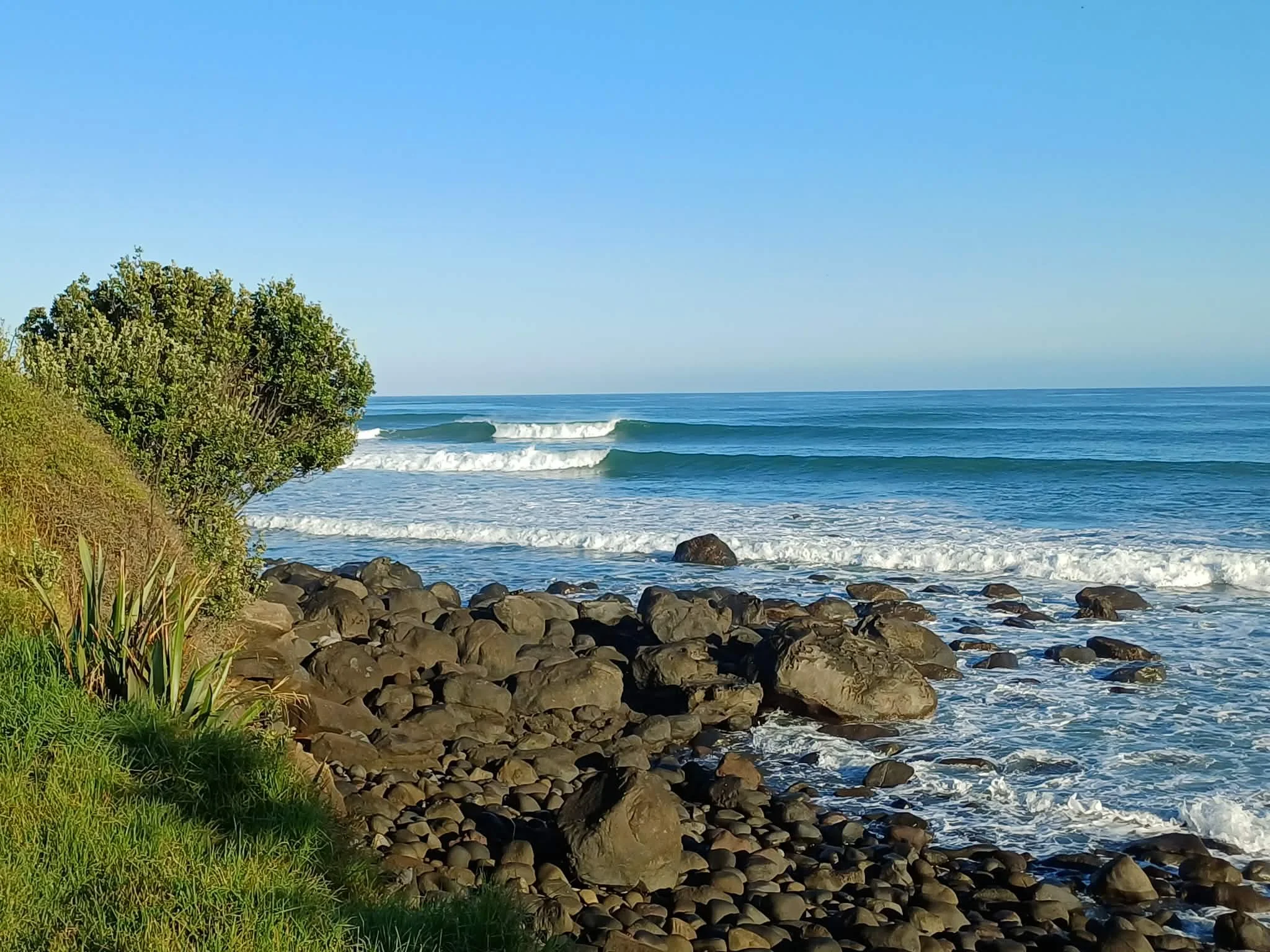
South Taranaki reef break with 2 metre southerly swell and light offshore southeasterly.
East Coast North Island:
Offshore winds from the southwest and west are likely from Bay of Plenty north, but the east to northeast wind flows to the north (swell source) being less common, less swell from the east and northeast is expected. Get your hands on a longer more floaty board to make the most of the smaller and less common surf!
Gisborne and Hawkes Bay surfers will feel more breezy west to northwest offshore winds, resulting in more clean waves. Locals and visitors will be relying on long period south swells for their surfing fix. Expect less easterly quarter swells than recent years.
Southern North Island:
Stronger northwesterly winds will favour the Wellington west coast beaches like Titahi Bay (locals claim it “the best onshore wave in the country”), and try picking the days when those blustery winds ease. Swell will be mostly short period, and will linger briefly after favourable southerly changes when winds go offshore. Attention will switch from the Wairarapa east coast to the south coast, with those brisk northwesters cross shore in the latter. Riversdale is more sheltered than Castlepoint under northwest conditions.
Wellington south coast surfers will be looking for “weather windows” when ridges arrive and strong offshore winds ease, and infrequent south swells arrive.
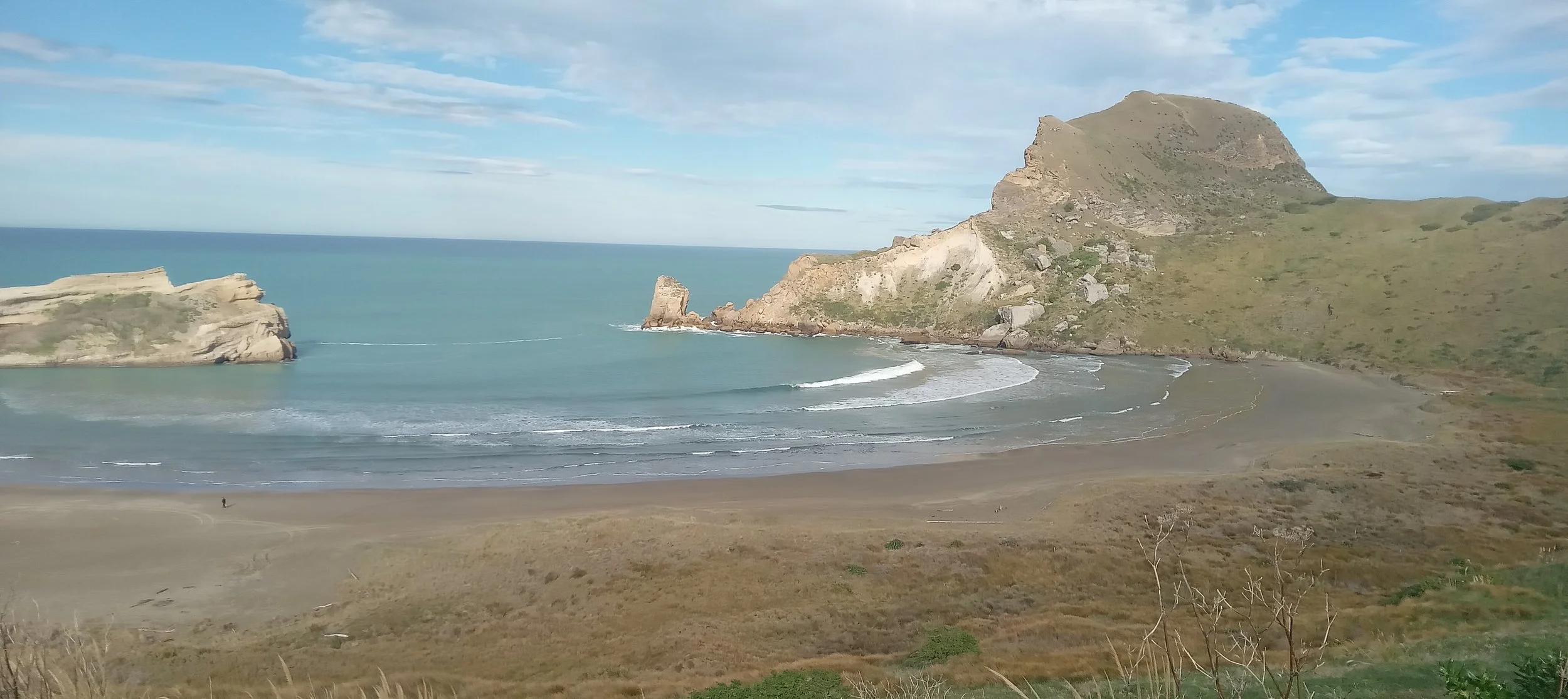
The Gap, Castlepoint with 1 metre southerly swell and light offshore northwesterly.
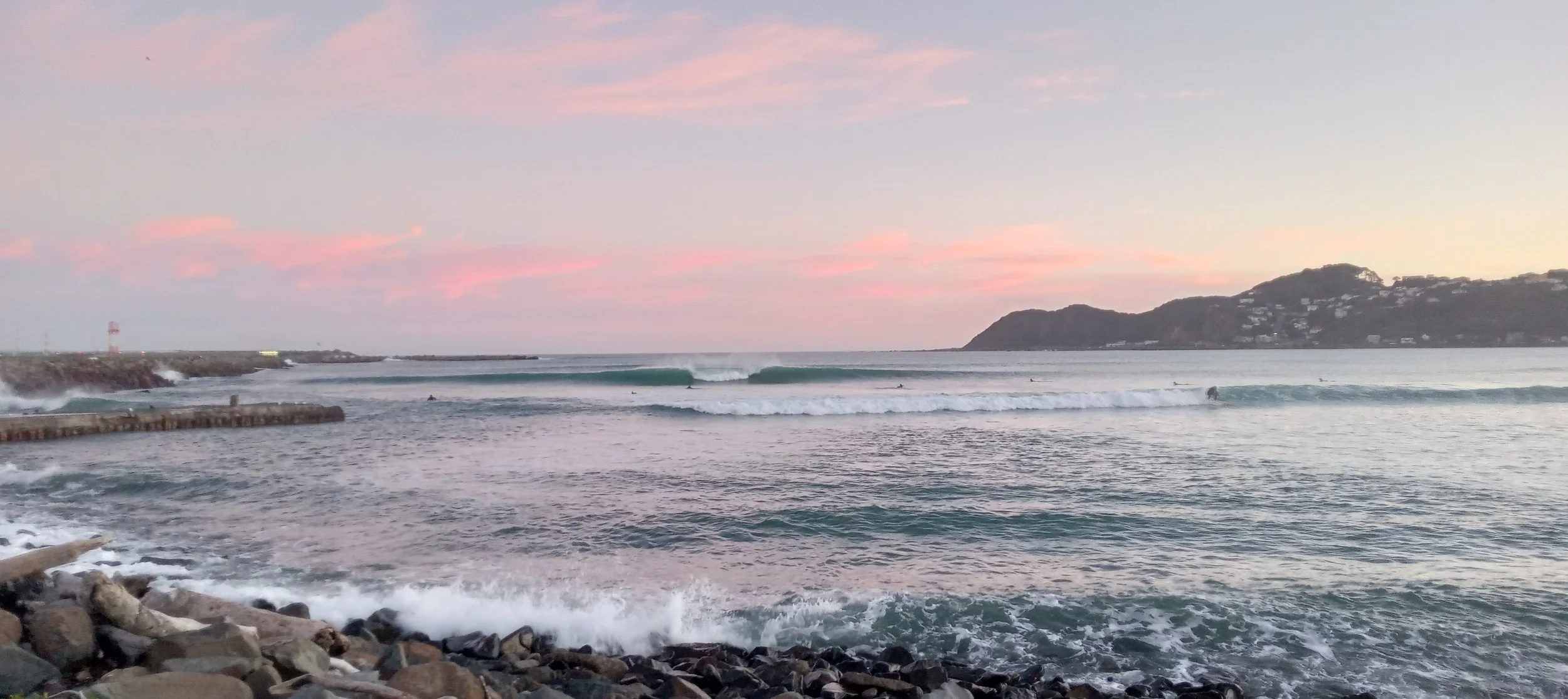
The Corner, Lyall Bay Beach with 1.5 metre southerly swell and light offshore northerly.
South Island West Coast:
Similar to North Island West Coast, with strong onshore westerlies common, and gnarly messy larger surf prevailing. Check sheltered spots, ask a friendly local if visiting or consult a surf guide book. Be alert to those “weather windows” opening.
South Island South and East:
Onshore east and northeast winds are being swapped out for stronger west to southwesterly winds. Expected less east to northeast swells, and chase the longer period south to southwest swells. Noting that the Canterbury and Kaikoura coasts see less of the southwest direction due to refraction out to sea.
Big waves spots on the Catlins coast may light up under larger long period south to southwest swells when westerly offshore winds ease.
Tides and final thoughts
You’ll need to figure out if low or high tide suits the surf spots you’re targeting, so go searching, check a surf guide book, or ask a more experienced friendly local. You can also check out the surfing forecasts over at www.metservice.com/marine/surf for an overview.
Winds are generally lighter in the early morning and evening, with daytime afternoon heating producing the windiest conditions. Dawn and dusk have the cleanest waves, folks!
El Niño is certainly “a big dog” in our weather, but it’s thought to contribute about a quarter of our month to month weather variability, so keep alert to those weather and wind patterns that make your favourite surf spots the place to be this spring and summer. Strong offshore winds create upwelling and thus colder surf zone sea temperatures, so less boardies and bikini days are likely up north, with spring suits and shorty wetsuits keeping you toasty. Also, be “Sunsmart” this spring and summer fellow surfers!
Seasoned salty surfers may recall the last significant El Niño of 1997 and 1998, so consult your “surf diary”, or if you’re a grommet ask a surfing elder what beaches were the pick back then, remembering that not all El Niño’s are identical.