
Thunderstorms
Thunderstorms can be tricky. They need just the right ingredients, a good push to get going, and when they finally show up, they can hit one spot while an area nearby remains untouched. You might be sitting in sunshine while just a few kilometres away, your Aunt Carol is getting hammered by hail from a booming thunderstorm cloud.
So how do they form?
Step 1: The Right Ingredients
To build a thunderstorm, the atmosphere needs to be unstable, which means it's ready for rising motion of air.
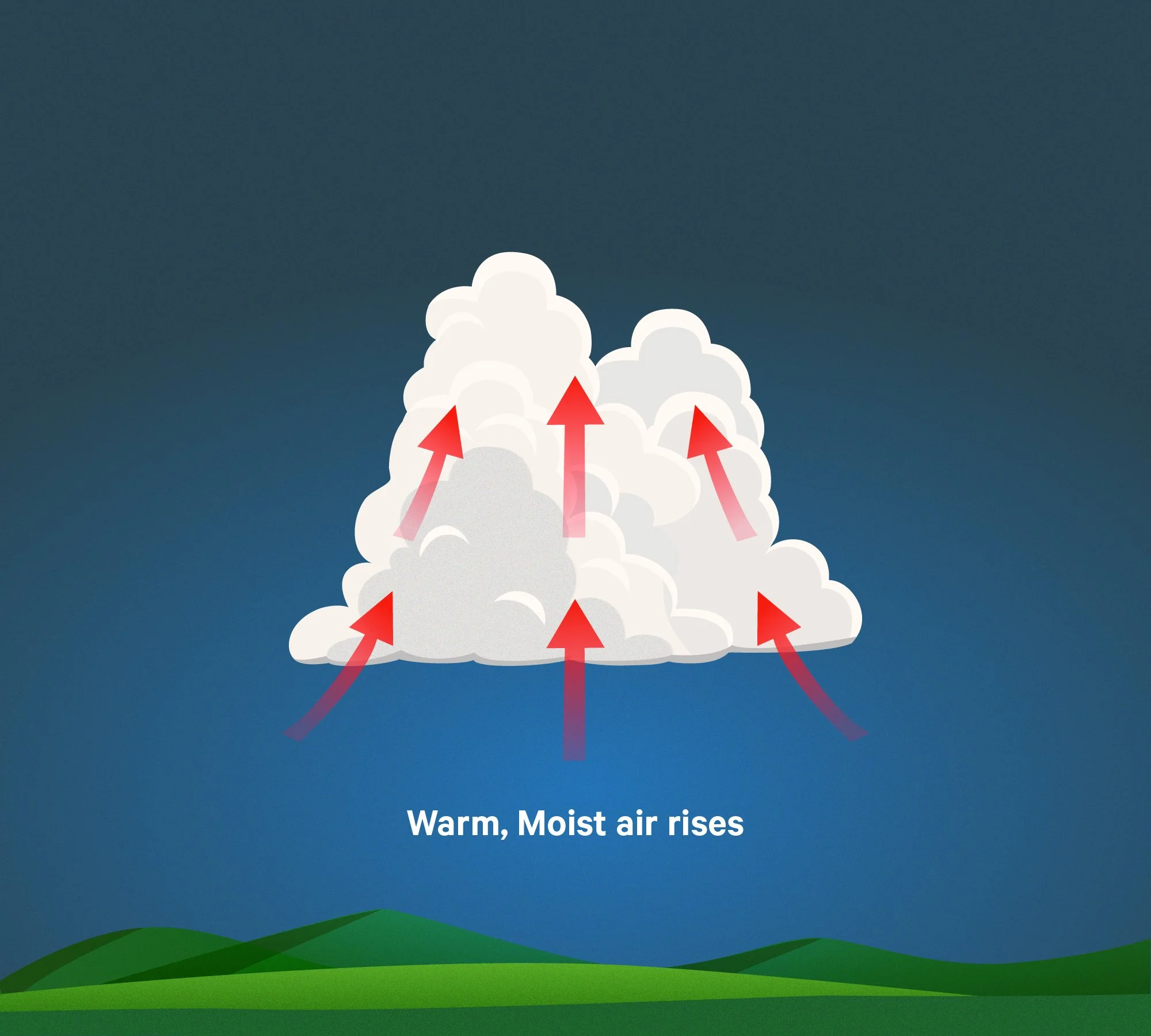
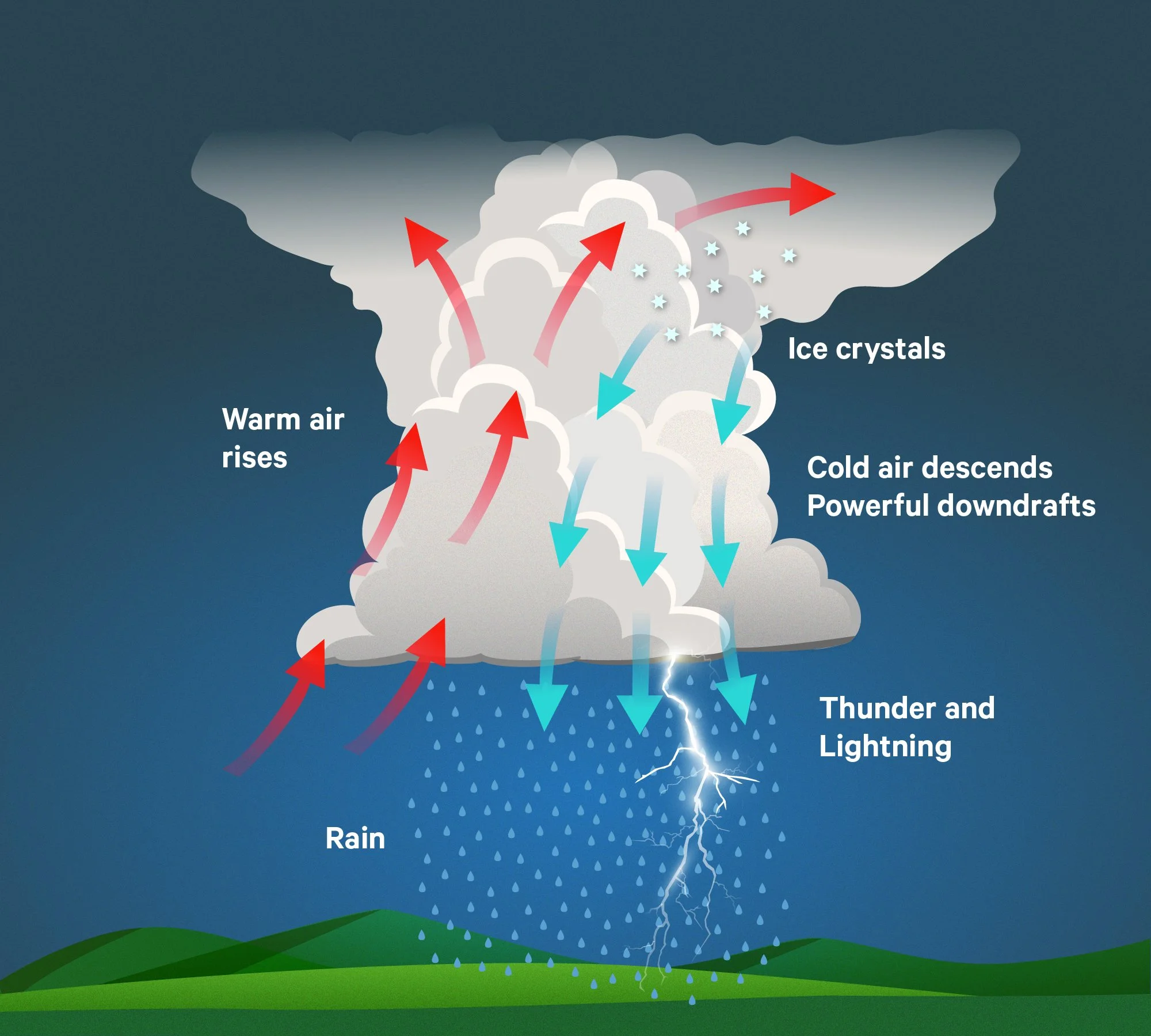
Think of a pot of water heating on the stove. As the bottom warms, bubbles begin to rise. Warm, moist air near the ground behaves in a similar way. It wants to rise into the cooler air above it (because warmer air is lighter per unit than cold air). Stronger rising motion happens either when the air near the ground is very warm, or the air above is very cool.
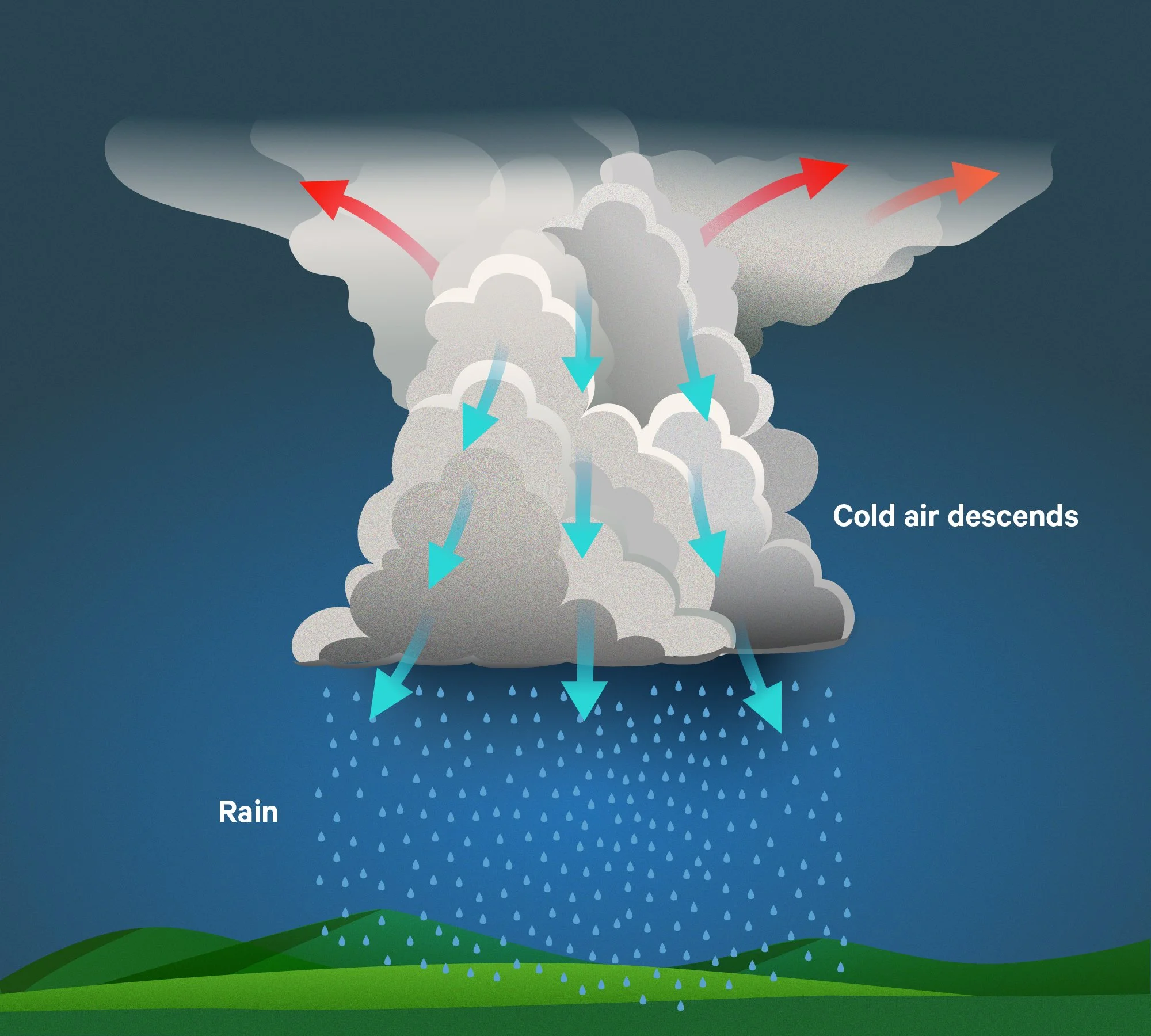
This often happens on a hot day, when the sun heats the ground. If there’s also moisture in the air, like from the sea for example, that adds even more fuel. As the warm air rises, it builds tall, puffy clouds that can grow into towering storm clouds called cumulonimbus. These are the ones that bring thunder, lightning, heavy rain, hail, strong winds, and sometimes tornadoes.
Step 2: A Push to Get Going
Even with the right setup, thunderstorms won’t appear on their own. They need a trigger, something to give that warm air the initial lift.
That trigger could come from:
A front, when two invisible walls of different types of air meet, pushing the warm air upward
A sea breeze, where winds from the sea collide with the land and push air up
A mountain, which forces the air to rise as it moves uphill
Or features higher up in the atmosphere that help lift air from below
Putting it all together
Once the trigger gets the rising motion going, instability keeps the air rising, and there’s enough moisture for clouds to form, a cumulonimbus cloud can quickly take shape, and the thunderstorm begins.
Forecasting exactly when and where that will happen isn’t easy. Even small changes in wind, temperature, or pressure can mean the difference between a full-blown storm or a completely quiet afternoon.