
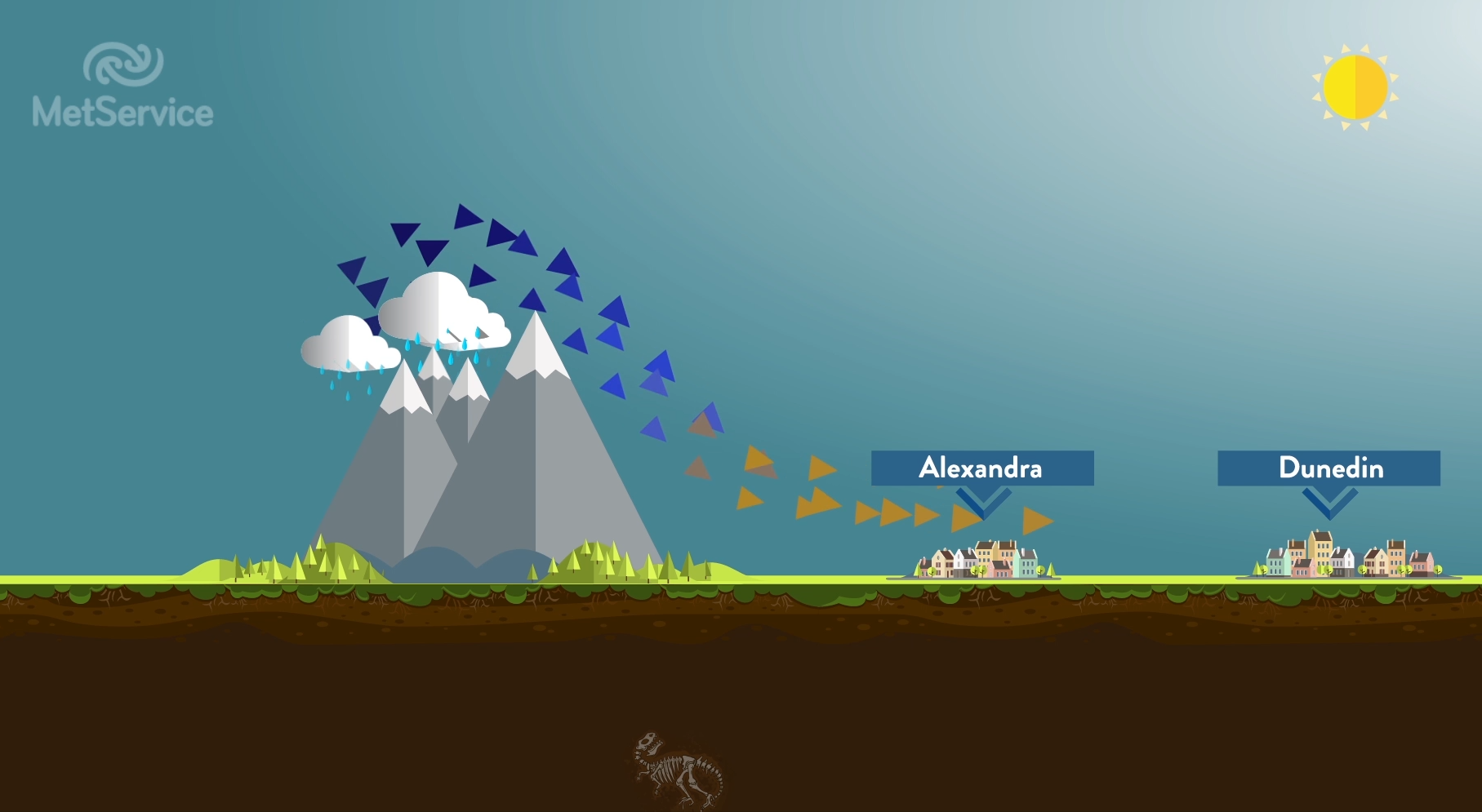
Foehn Wind
Have you ever wondered why the nation’s warmest temperatures tend to be in Canterbury or Hawke’s Bay? Northland is closest to the equator, so why is that not always the hottest area?
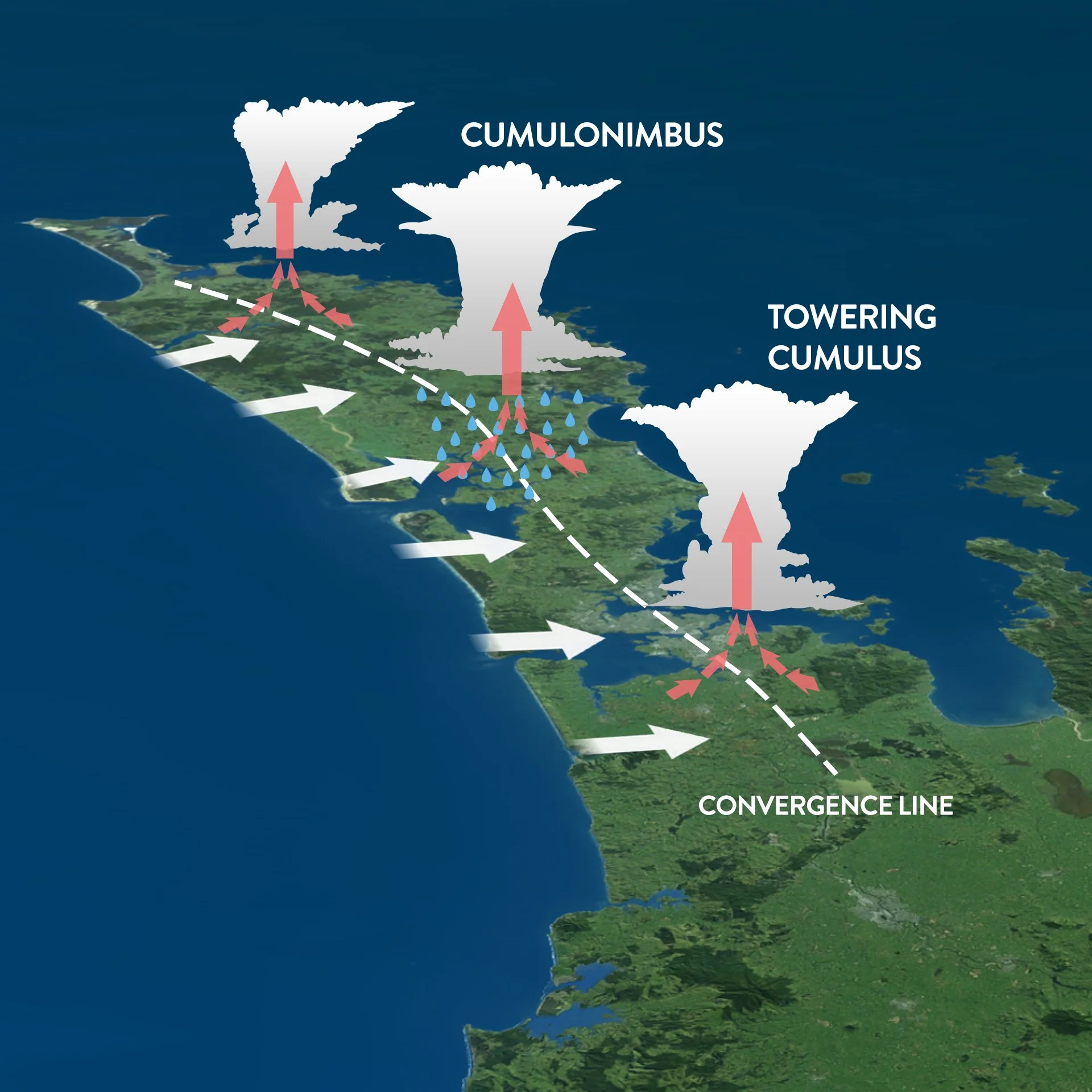
Convergence
In weather, convergence happens when air flowing from different directions meets. When this air comes together, it has nowhere else to go but upwards. That rising motion of air causes it to cool down, which can lead to clouds and rain. Convergence is a key part of how showers, thunderstorms, and cloudy weather form. It's something meteorologists keep a close eye on, as it helps pick out where active weather, like clouds, showers, storms, and even cyclones, is likely to form.
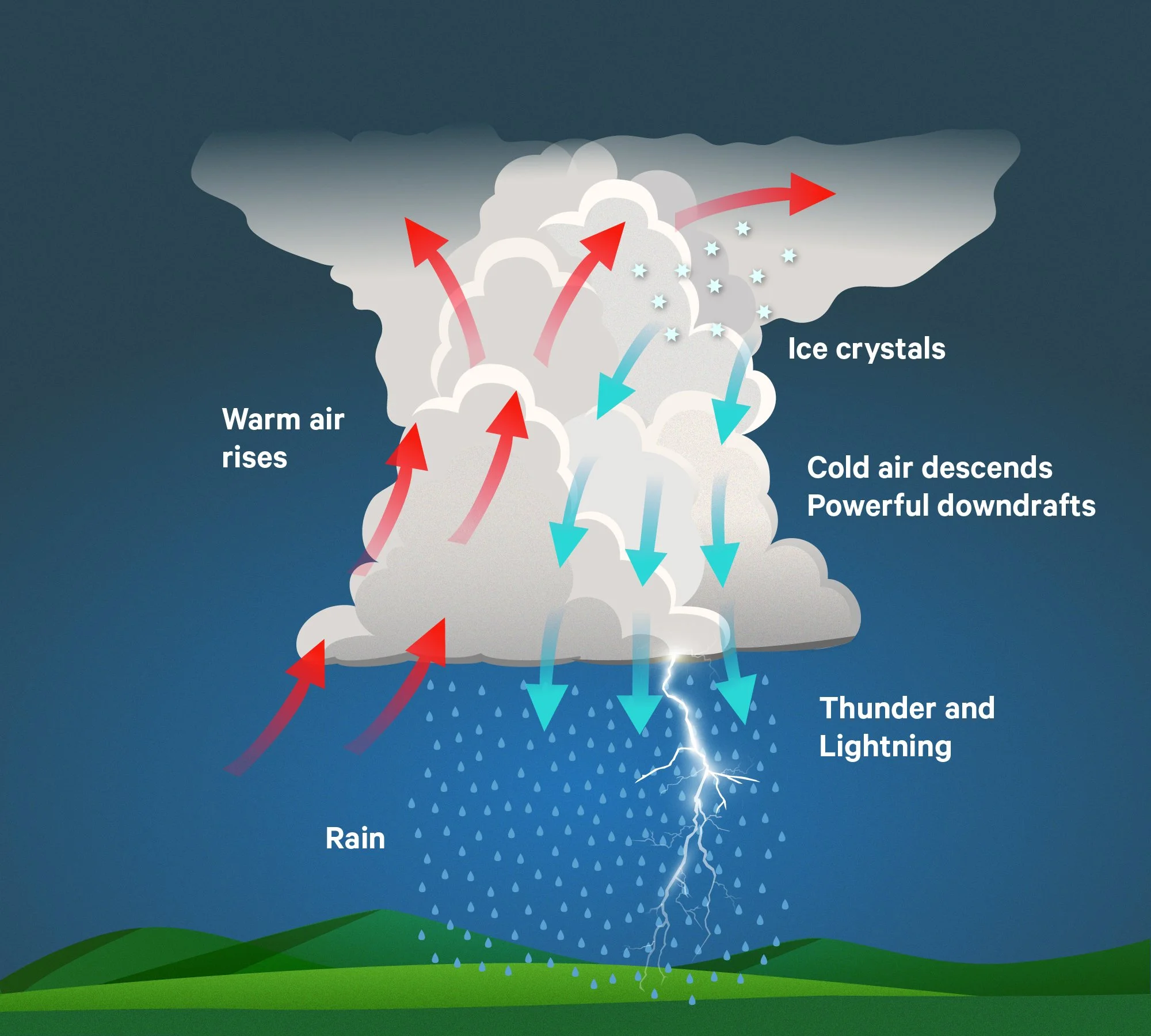
Thunderstorms
Thunderstorms can be tricky. They need just the right ingredients, a good push to get going, and when they finally show up, they can hit one spot while an area nearby remains untouched. You might be sitting in sunshine while just a few kilometres away, your Aunt Carol is getting hammered by hail from a booming thunderstorm cloud.
So how do they form?
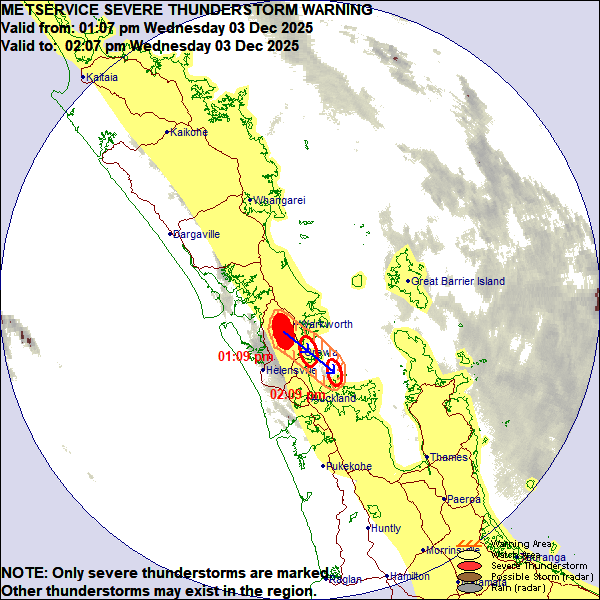
Severe Thunderstorms
Most of New Zealand’s severe weather comes from large systems like lows and fronts, which can affect wide areas for long periods. But some of our most intense weather, like very heavy rain, large hail, or even damaging winds, can come from something much smaller and shorter-lived: a severe thunderstorm.
Wind Chill
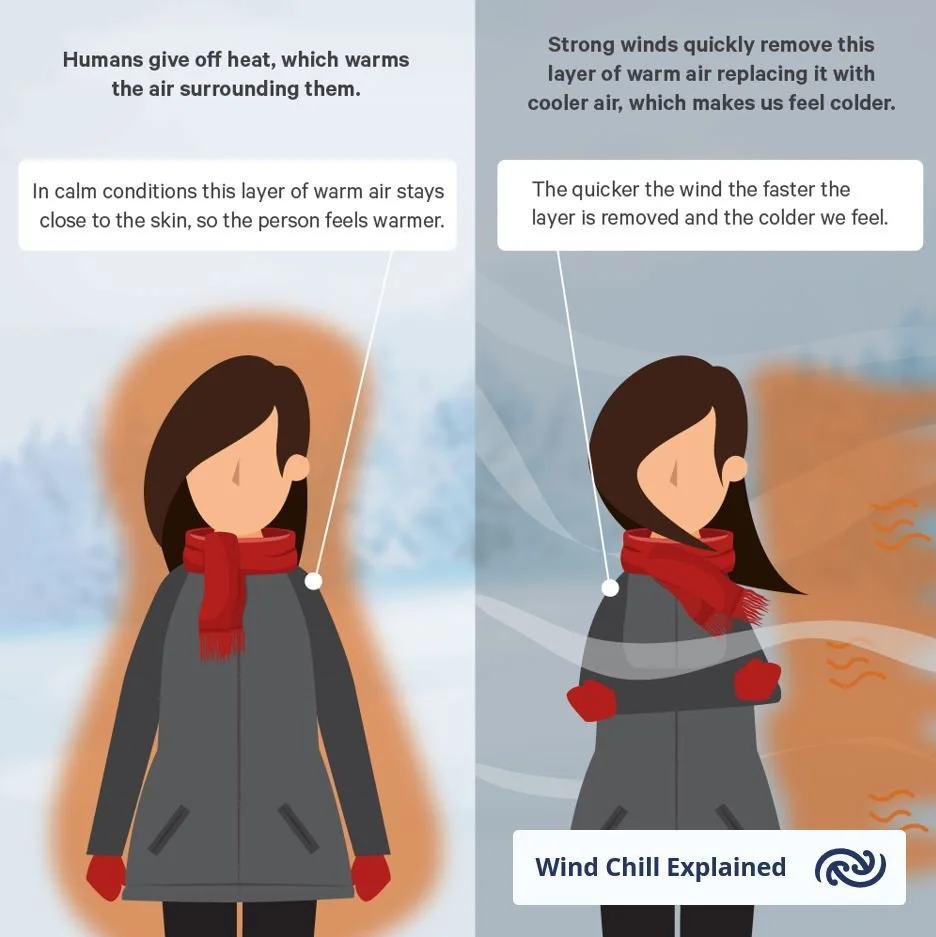
When you’re outside on a cold, breezy day, it often feels colder than the thermometer says. That’s because the wind carries heat away from your skin, speeding up how quickly you cool down. This effect is known as wind chill.
Understanding Tropical Cyclone Track Maps
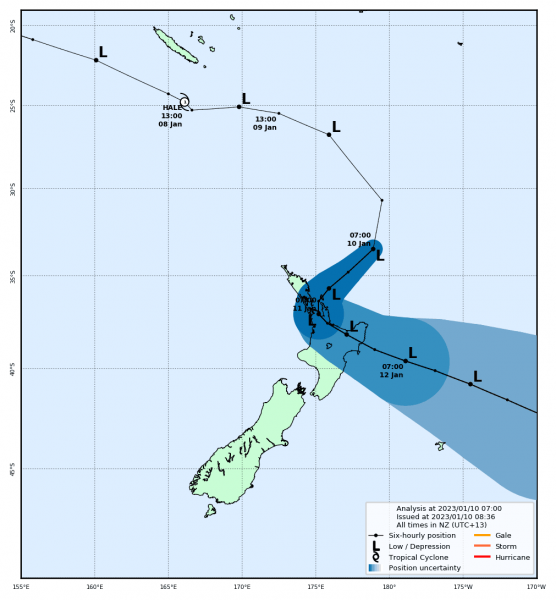
Tropical Cyclone season for New Zealand runs from 1 November to 30 April. During this time, MetService issues track maps to show where a tropical cyclone has been and where it’s expected to go next.
Each map tells two stories: the past and the future.
Tropical cyclones: Extra-tropical transition
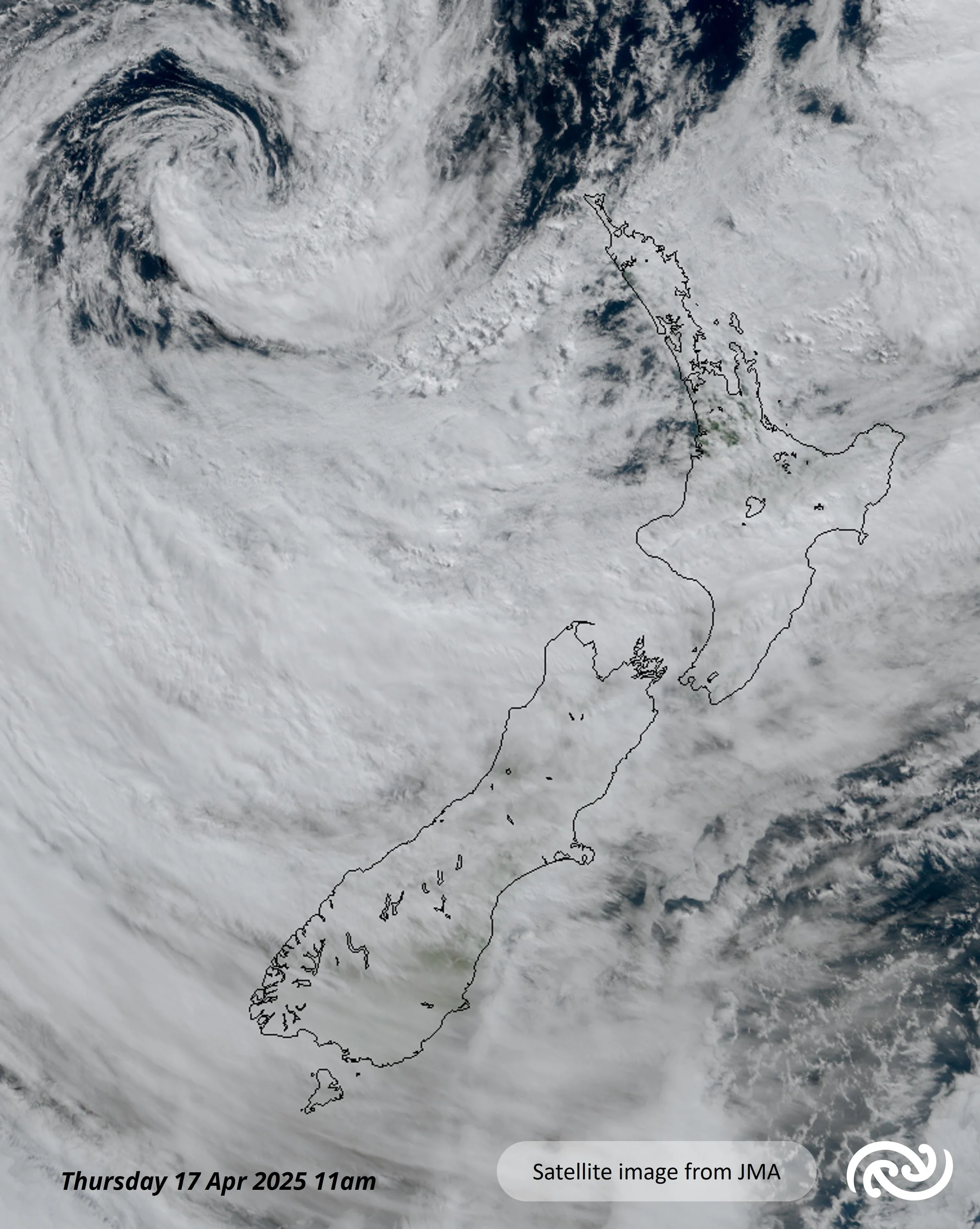
Each year, about nine tropical cyclones form in the South Pacific between November and April. Of these, three or four move south out of the tropics, and most of them transform into a different kind of weather system before they reach New Zealand.

What’s in a name?
What do Irene, Rae, Tam, and Osai all have in common?
They’re all names of past South Pacific tropical cyclones. But who decides on these names? And why name them at all?

Automatic Weather Stations
A long time ago, weather forecasters had to rely on people like lighthouse keepers to tell them what the weather was doing. These people would check instruments by hand and send in their observations by telegraph.
These days, things are a lot easier. We now have automatic weather stations that do most of the work for us.

Create a rain gauge
Measuring how much rain has fallen needs a rain gauge. We can make a simple rain gauge by using a straight sided bottle, some stones, scissors, a marker and a ruler.


Tropical Cyclone Gabrielle
Few weather events are as terrifying or as powerful as a tropical cyclone. MetService have tropical cyclone specialists in its National Forecasting Centre who always have their eyes on the Tropics and issue appropriate and timely warnings based on expertise, weather observation network and weather modelling tools.

The art of weather forecasting
Some may think it’s one of those jobs which anyone might turn their hand to, but the difficulties of weather forecasting are hugely underrated. After all, there aren’t many jobs where you’re expected to predict the future. Economists are also required to make forecasts, but at least they have some control over the system they are foretelling. When it comes to weather, meteorologists have no such influence.

Observing the weather
We all look out the window to see what the weather is up to. In a similar way, MetService meteorologists are always checking to make sure what they have predicted is actually happening.

Modelling the weather
Accurate weather forecasting requires three key ingredients – trustworthy observations, reliable computer models, and experienced meteorologists.

Aurora
In most atmospheric optical phenomena, the light has come from the sun, but sometimes from the moon, or city lights. Auroras are a different story. The lights of Aurora Australis (or Aurora Borealis in the Northern Hemisphere, or Northern Lights) are actually emitted by gas particles in the atmosphere itself.

Sun Pillars
Sun pillars are most commonly seen near sunset or sunrise. Sun pillars form in a similar way to light pillars, reflecting light off of ice crystals in the air.

Light Pillars
Like ice halos and arcs, light pillars are formed by ice crystals. However, the way they are formed is much less complex – light simply reflects off of ice crystals in the air.


22° Circular Halos
22° halos are created by refraction of light through randomly oriented hexagonal prism shaped ice crystals. These ice halos occur very frequently, even more often than rainbows! Light is refracted as it enters through one face of the hexagonal ice crystal, and is refracted once more as it exits through another face.